
Technical Specifications at a Glance
Our rubber compensators are engineered to meet diverse industrial requirements
Size Range
- Standard Sizes DN20 - DN4000
- Custom Sizes Available
- Large Diameter Up to DN4000+
- Standard Types KXT, KST, WCR
Pressure Ratings
- Standard Pressure PN6, PN10, PN16
- High Pressure PN25, PN40
- Custom High Pressure Up to PN100
- American Standard 150LB, 300LB
Rubber Material Options
- Standard Rubber EPDM, NBR, Neoprene
- Natural Rubber (NR) For water applications
- Special Materials FKM (Viton), Silicone
- Lining Options PTFE Lined, NR Lined
Flange Materials
- Carbon Steel Standard option
- Stainless Steel SS304, SS316
- Galvanized Steel Corrosion resistant
- Special Materials UPVC, Aluminum
Movement Compensation
- Axial Movement Up to 50mm
- Lateral Movement Up to 30mm
- Angular Movement Up to 15°
- Vibration Isolation Excellent
Our Strength: Powerful Customization Capability
We specialize in tailor‑made rubber compensators to meet your specific project requirements
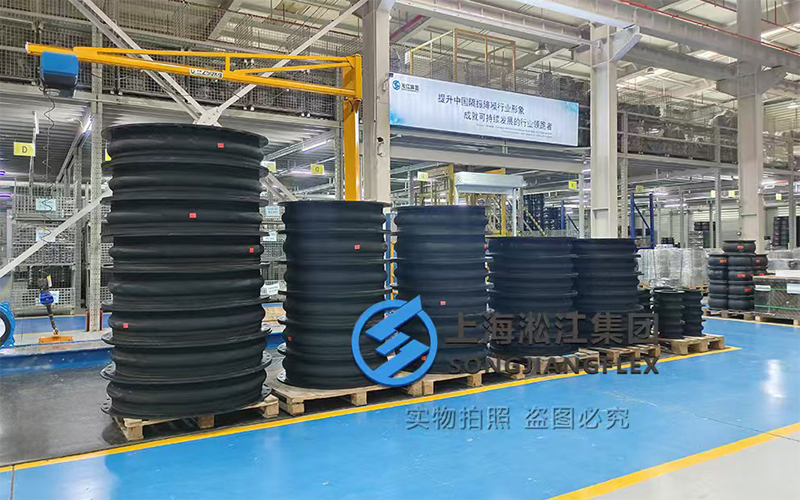
Full Customization by Specification
We can customize rubber joints by pressure rating (PN6-PN100), size range (DN20-DN4000), temperature range (-30°C to +150°C), movement requirements (axial, lateral, angular), and media compatibility.
Hand-Built (WCR Type) for Complex Shapes
For non-standard sizes and complex configurations, our skilled craftsmen use hand-built techniques to ensure perfect fit and performance.
Premium Material Expertise
We work with various high-quality rubber compounds (EPDM, NBR, Neoprene, CSM, Silicone) and linings (PTFE, natural rubber) to match your chemical and temperature requirements.
We use only high-quality virgin rubber, never recycled rubber.
Engineering Support
Our engineering team provides technical consultation, stress analysis, and design optimization to ensure your rubber joints perform reliably in demanding applications.
Pressure Testing & Quality Assurance for Rubber Compensators
Pressure testing of high-end rubber compensators and custom industrial rubber expansion joints is a critical quality control measure before they leave the factory, ensuring product reliability and safety. Our professional testing process fully demonstrates our commitment to product quality and professionalism as a leading rubber compensator manufacturer.
Verifying Structural Integrity of Rubber Compensators
Pressure testing (typically hydrostatic testing) is a crucial step to verify whether the rubber compensator maintains structural integrity without damage or deformation when subjected to extreme conditions above its designed working pressure.
Ensuring Sealing Performance of Rubber Expansion Joints
Testing can accurately detect the product's sealing performance and resistance to leakage. Excellent sealing is vital for avoiding media leakage in pipeline systems, ensuring personnel and environmental safety for all flexible rubber joints.
Compliance with Industry Standards for Rubber Compensators
Our testing center executes standards compliant with relevant quality supervision bodies and follows stringent protocols issued by industry associations such as the FSA (Fluid Sealing Association), providing tangible evidence to customers that our rubber expansion joints meet regulations and expectations.
Preventing Operational Failure of Rubber Compensators
By simulating the most severe operating conditions and pushing the rubber compensators to their limits, we can identify potential weaknesses early, preventing costly failures during actual installation and operation of pipeline expansion joints.
Enhancing Customer Trust in Our Rubber Compensator Quality
Strict quality control and testing processes demonstrate the durability and reliability of our rubber compensators and flexible rubber joints to customers, helping to build long-term consumer trust and loyalty.
Professional Equipment and Technology for Rubber Joint Testing
As shown in the image, we use professional hydraulic testing equipment to pressure test large-diameter rubber compensators, supplemented by experienced technicians for monitoring and certification, reflecting our professional technical support and attention to detail as a high-end rubber compensator manufacturer in China.
All our testing and quality checks for rubber compensators and rubber expansion joints are performed based on an ISO 9001 approved Quality Control Manual and internal strict procedures at our factory in Jiangsu, China.
Rubber Compensator FAQ
Short answers for engineers and buyers about rubber compensators, custom industrial rubber expansion joints, and flexible rubber joints.
What is the difference between a rubber compensator and a rubber expansion joint?
Essentially, they are the same product. The term 'rubber compensator' is more commonly used in Europe and for specific engineering applications, while 'rubber expansion joint' is the standard term in North America. Both serve to compensate for movement and reduce noise in piping systems. As a professional rubber compensator manufacturer, we produce both types of flexible rubber joints.
What are the advantages of WCR type hand-built rubber compensators?
- Higher Structural Strength: Constructed with multiple layers of rubber and fabric reinforcement through a winding process, providing superior strength and durability under high pressure and deformation for industrial rubber compensators.
- Adaptability to Large-Diameter Pipelines: The winding technology enables the production of larger-diameter rubber expansion joints, making them ideal for large-bore and high-pressure conditions while overcoming the size limitations of traditional molding process.
- Excellent Fatigue Resistance: Due to the characteristics of the winding process, these rubber compensators are less prone to cracking or delamination during repeated deformation, ensuring a longer service life for flexible rubber joints.
- Superior Compensation Capability: Effectively absorbs axial, lateral, and angular displacements, reducing stress concentration in the piping system and enhancing overall operational stability of pipeline expansion joints.
- Flexible Customization: Rubber materials, reinforcement structures, and wall thicknesses can be adjusted to meet specific requirements for different media, temperatures, and pressures in custom rubber compensators.
- Outstanding Corrosion Resistance: Available with various rubber compounds resistant to acids, alkalis, high temperatures, oil, and abrasion, making them suitable for diverse industrial environments for rubber expansion joints.
- Effective Vibration and Noise Reduction: The inherent elasticity and damping properties of rubber significantly reduce vibration and noise, improving the smoothness of equipment operation with flexible rubber joints.
Applications: Owing to these advantages, winding rubber compensators are widely used in large-diameter piping systems, high-pressure pipelines, shipbuilding, chemical processing, nuclear power, hydropower, and other heavy industries requiring reliable rubber expansion joints.
Can you manufacture custom rubber compensators for non-standard sizes or large movements?
Yes. As a professional rubber compensator manufacturer, we support hand-built, high-movement, oversize, vacuum-resistant and high-temperature rubber compensators. Send us your drawing or application data and our team will recommend a suitable design for your rubber expansion joints or flexible rubber joints.
Which standards do your rubber compensators follow?
Our rubber compensators can be manufactured with flanges to DIN, ANSI, JIS and other standards. Pressure classes cover PN6, PN10, PN16, PN25, PN40 and up to PN100 depending on the product series for rubber expansion joints. We also produce flexible rubber joints with SS304, SS316, galvanized, UPVC, and aluminum flanges.
What certifications does your rubber compensator factory hold?
Our quality management system is ISO 9001 certified, ensuring consistent production and quality control for all rubber compensators. We also hold ABS (American Bureau of Shipping) and CCS (China Classification Society) certifications for marine applications of rubber expansion joints. Furthermore, we have the capability to produce food-grade rubber compensators that comply with relevant safety standards for potable water and food processing industries.